
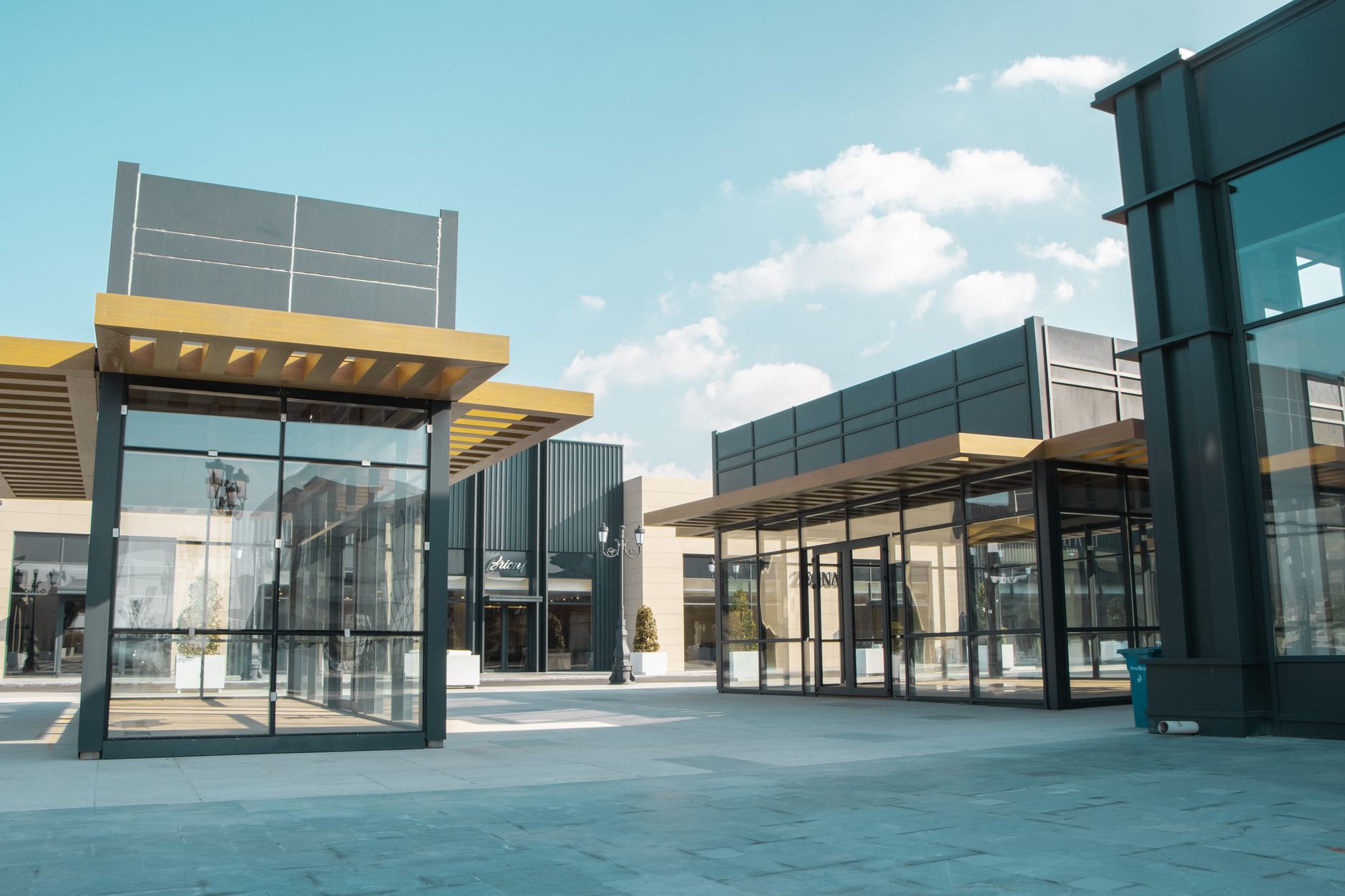
Southwest Ohio is attractive to commercial investors because it combines transportation access, diverse employers, relative affordability, a large regional population base, and a wide range of practical commercial property types. Investors can find interest in small retail, industrial, flex, office, medical, mixed-use, and service-business properties. The region is not attractive because every building is easy. It is attractive because demand exists across several different economic lanes.
Cincinnati, Dayton, Northern Kentucky, and the surrounding communities form a connected business region. Interstates, logistics routes, airports, universities, hospitals, corporate employers, manufacturing, and neighborhood business districts all support commercial real estate in different ways.
Location and Logistics Matter
Southwest Ohio benefits from access to major highways and a location within reach of many Midwest and eastern U.S. markets. That matters for industrial, warehouse, distribution, contractor, and service businesses. Commercial investors often like markets where businesses have practical reasons to occupy space, not just speculative reasons.
Functional buildings can be very attractive when they serve real business needs. A simple flex building with loading access and parking may be more useful than a prettier building in a weaker location.
The Employer Base Is Diverse
Healthcare, education, consumer goods, logistics, manufacturing, finance, professional services, and regional employers all contribute to demand. Commercial real estate is healthier when demand does not depend on one industry alone. A diverse economy gives investors more possible tenant types and more exit options.
This does not mean every submarket is strong. It means the region has multiple demand drivers that can support different commercial strategies if the property is chosen carefully.
Affordability Still Creates Entry Points
Compared with larger coastal markets, Southwest Ohio can offer more approachable pricing. That can allow smaller investors to buy commercial property without needing institutional-level capital. A local investor may be able to buy a small retail building, mixed-use property, or flex space that would be out of reach in a more expensive metro.
The danger is assuming affordability equals value. A low price may reflect vacancy, repairs, weak location, obsolete layout, or tenant risk. Investors still need to underwrite income and replacement demand.
Small Commercial Space Has Real Users
Many local businesses do not need glamorous buildings. They need visible storefronts, small offices, contractor bays, storage, parking, or flexible space. That creates opportunity for investors who understand local tenant needs. A modest building in the right corridor can be more resilient than a larger building with a narrow user base.
Neighborhood retail and service properties can also benefit from population density and daily-use demand. Restaurants, salons, clinics, insurance agencies, repair businesses, and local service providers all need real estate that works operationally.
What Investors Still Need to Watch
- Older roofs, HVAC systems, parking lots, and building systems.
- Lease rollover risk in single-tenant properties.
- Zoning, access, signage, and parking limitations.
- Rent assumptions that exceed what local tenants can afford.
- Specialized layouts that are hard to re-lease.
The Southwest Ohio Answer
Investors should also pay attention to municipal differences. A building in Cincinnati, Dayton, Hamilton, Middletown, Mason, Blue Ash, Covington, Newport, or a smaller township may face different zoning rules, tenant demand, tax considerations, and approval timelines. The regional story gets you interested. The local rules decide whether the property actually works.
Southwest Ohio also has a useful mix of older and newer commercial inventory. Older buildings can create value-add opportunities, but they often require more careful review of roof age, mechanical systems, parking, accessibility, and code compliance. Newer buildings may be easier to finance and lease, but the price may already reflect that safety.
This mix gives investors choices. A conservative buyer may prefer a stabilized building with a lower return and fewer surprises. A more experienced operator may look for a building with vacancy, below-market rent, or deferred maintenance, but only if the price leaves enough room to solve those problems.
Southwest Ohio attracts commercial investors because it has real businesses, real transportation advantages, useful building stock, and pricing that can still make sense. The best opportunities are not generic. They are properties where the location, tenant demand, lease structure, and building condition all support the investment plan.
Southwest Ohio Has Several Demand Drivers
Southwest Ohio is attractive to commercial investors because demand comes from more than one source. The region has healthcare, education, logistics, manufacturing, corporate offices, local service businesses, and access to major transportation routes. That diversity can support industrial, service retail, medical, small office, and neighborhood commercial properties when the location and price are right.
The region also offers a range of deal sizes. An investor may look at a small storefront, contractor building, flex space, medical office, or mixed-use property without needing the capital required in more expensive metros. That can make Southwest Ohio practical for investors moving from residential into commercial.
- Industrial demand benefits from highway access and logistics activity.
- Medical and service users can support smaller office and retail properties.
- Older corridors may offer value-add opportunities if tenant demand is real.
- Lower entry prices can improve yield, but repairs and leasing risk still matter.
The Opportunity Is Corridor-Specific
Commercial real estate in Southwest Ohio should be evaluated corridor by corridor. A building near strong traffic, parking, and tenant demand may perform very differently from a similar building in a weaker location. Industrial users care about access and functionality. Retail users care about visibility and customers. Office users care about convenience and layout.
The market is attractive because it has real economic anchors, but investors still need property-level discipline. The best commercial deals are not bought because they are in Southwest Ohio. They are bought because the income, tenant demand, building function, and price all line up.
Southwest Ohio also benefits from having multiple submarkets instead of one single investment story. Cincinnati, Dayton-area corridors, suburban industrial pockets, older neighborhood retail, and service-commercial locations can each behave differently. That gives investors choices, but it also requires a more specific strategy than simply buying anywhere in the region.
The strongest opportunities usually appear where an ordinary business can clearly use the space. If the building solves a practical operating need for tenants, the investment story becomes much easier to believe.
Investors should also watch replacement cost. In some Southwest Ohio submarkets, buying an existing functional building may cost far less than building new. That can support long-term value if tenant demand is real and the building does not require excessive deferred maintenance.
That replacement-cost advantage is strongest when the building remains practical for modern users. Low price alone is not enough if ceiling heights, parking, loading, utilities, or layout no longer fit tenant demand.